see more works


A Narrative Web Experience on Ancient Chinese Bronze Culture

This project is a commissioned commercial design collaboration with China Central Television (CCTV). We were responsible for the “Food Vessels” vertical within the large-scale Bronze Civilization integrated-media digital exhibition. Aiming to move beyond conventional web browsing, we developed a visually arresting, highly interactive web format to tell the stories behind bronze food vessels. At the same time, we carefully balanced creative ambition with the technical constraints of web delivery to ensure feasibility and stable performance for a large-scale, deployed exhibition.
This project is grounded in the historical system of bronze food vessels. By consulting multiple primary sources — oracle bones, bronze inscriptions (jinwen), the ding–gui ritual system, The Rites of Zhou (Zhou Li), the Da Ke Ding inscription, and pre-Qin script evolution — we trace a civilizational chain of “script→system→artifact→personal memory.” We also reviewed museum display strategies and digital heritage cases to determine how immersive narrative, animated visualization, and symbolic structuring can present complex facts so users both understand institutional logic and feel the civilization’s emotional force.






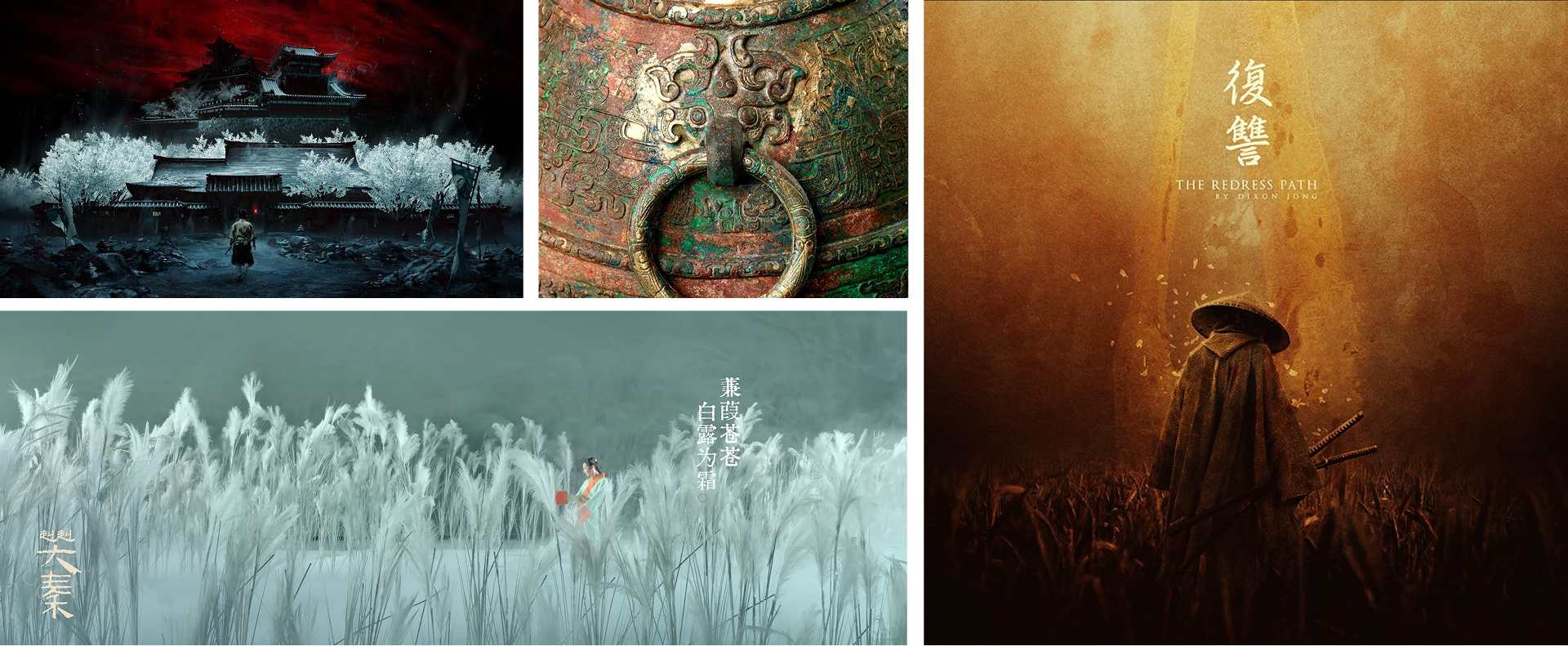
The project’s visual style centers on cinematic atmosphere and the weight of bronze artifacts, using a dark, grounded palette, high-contrast lighting, and poster-like compositions to evoke the solemnity of national treasures. Light yet purposeful animations—such as oracle-script evolution and gold-reveal effects—introduce approachable moments within an epic narrative tone. The result is a style that feels substantial without being heavy, solemn yet full of life.
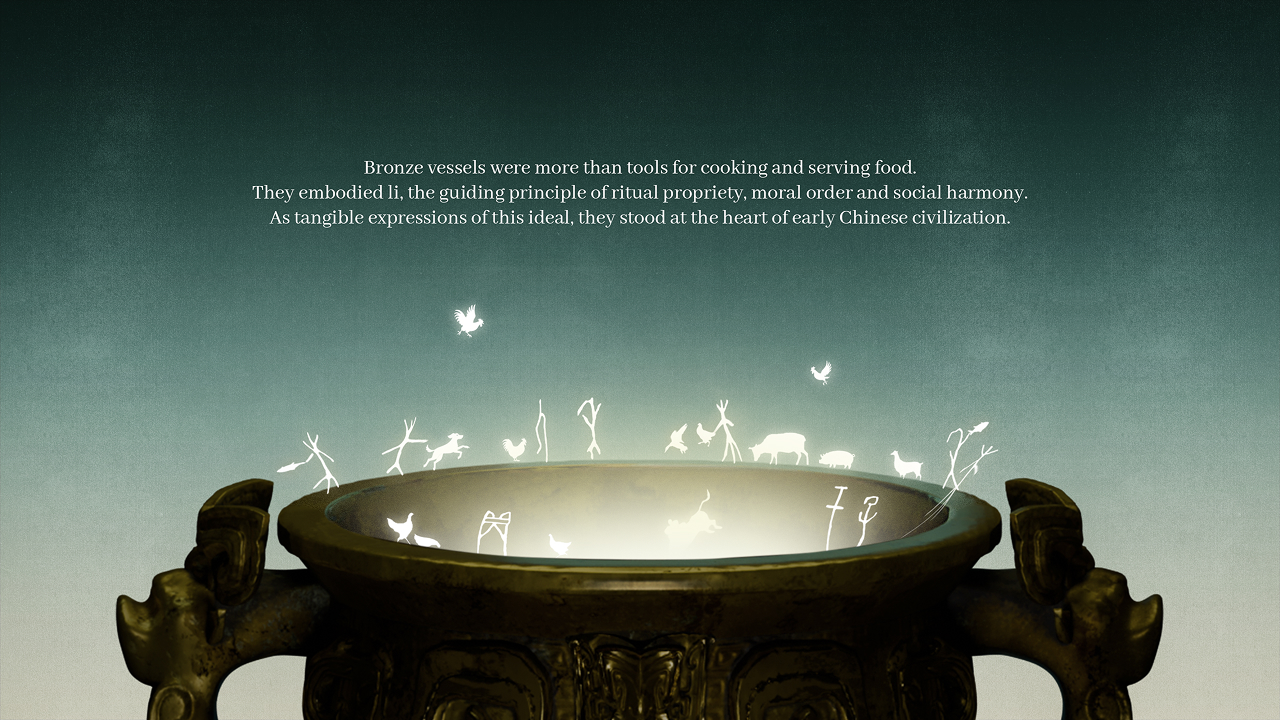
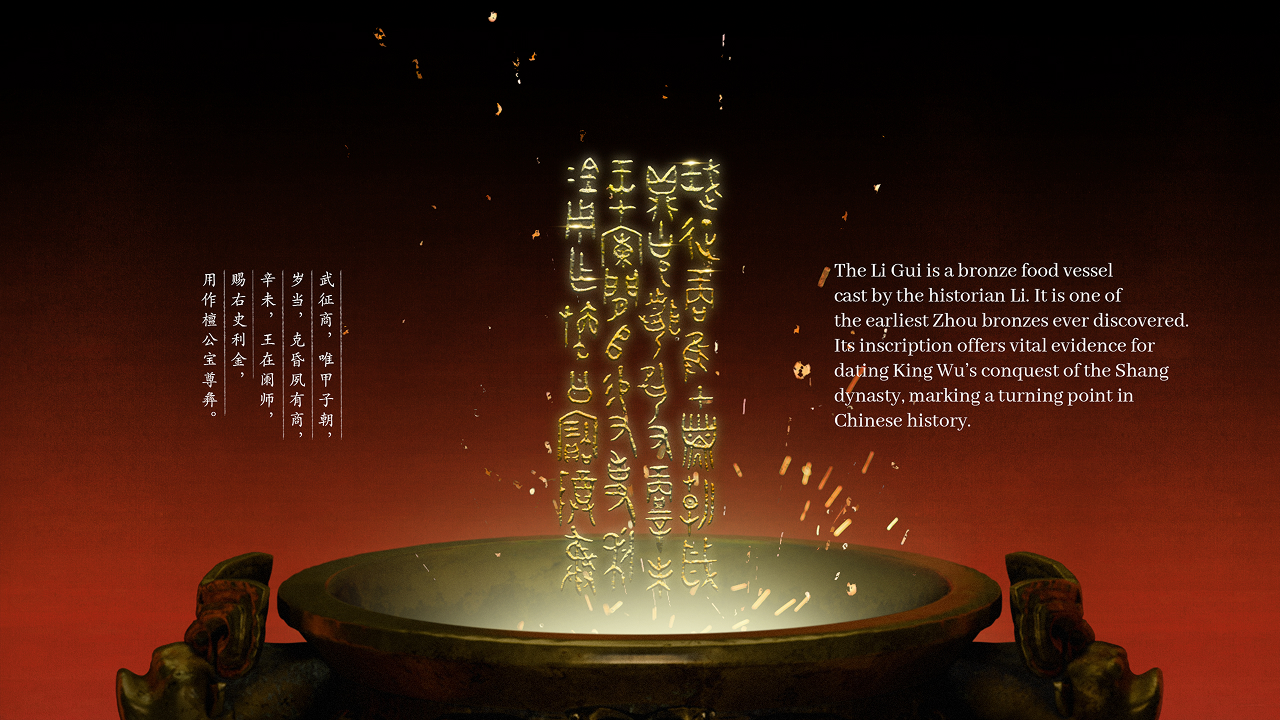
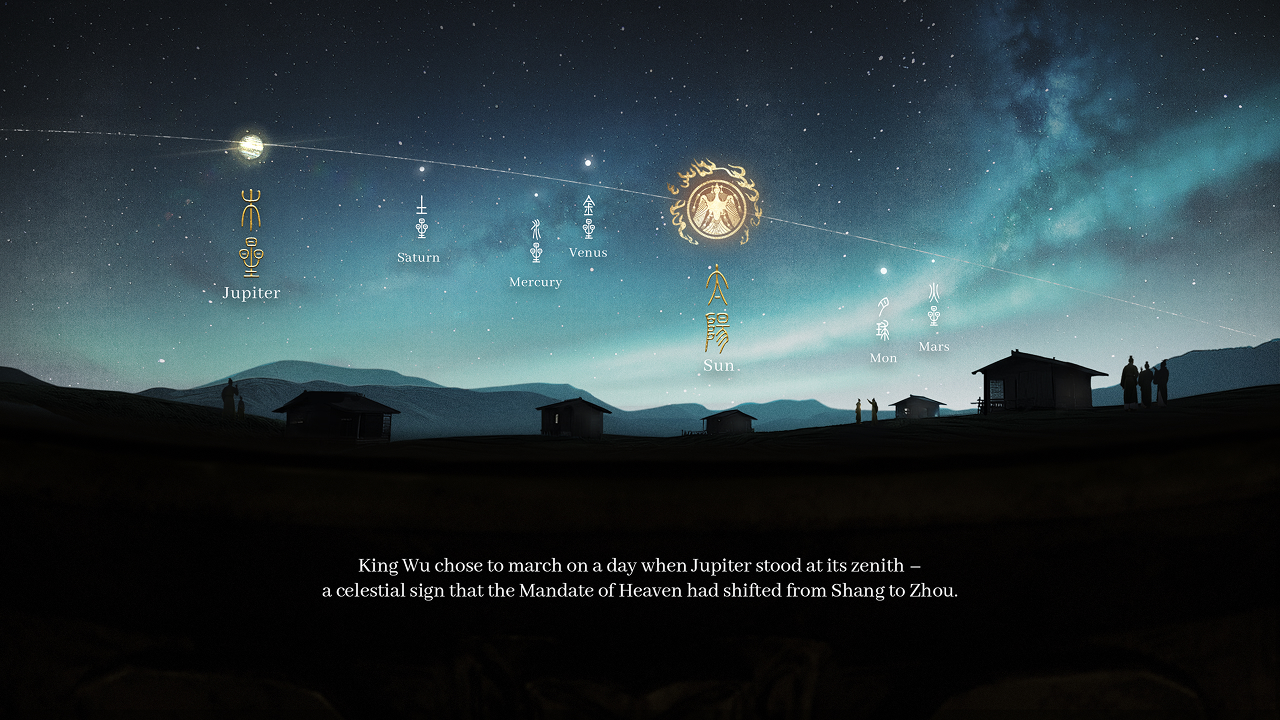
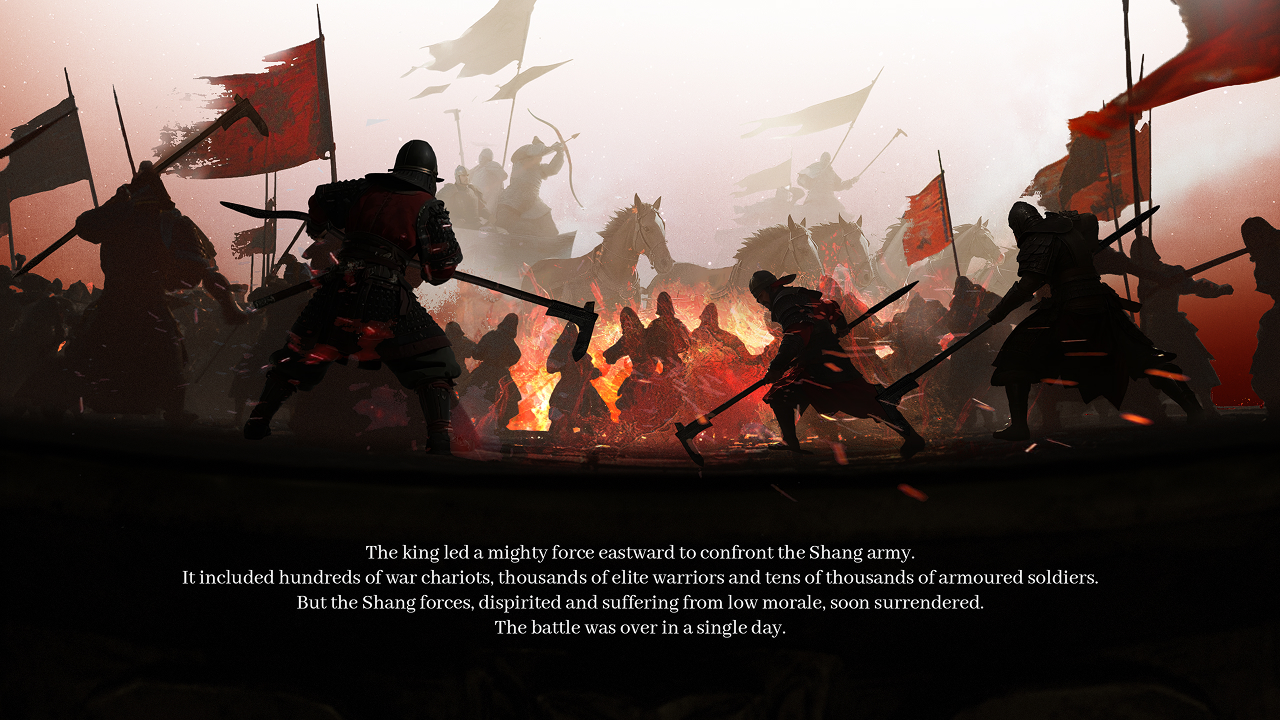
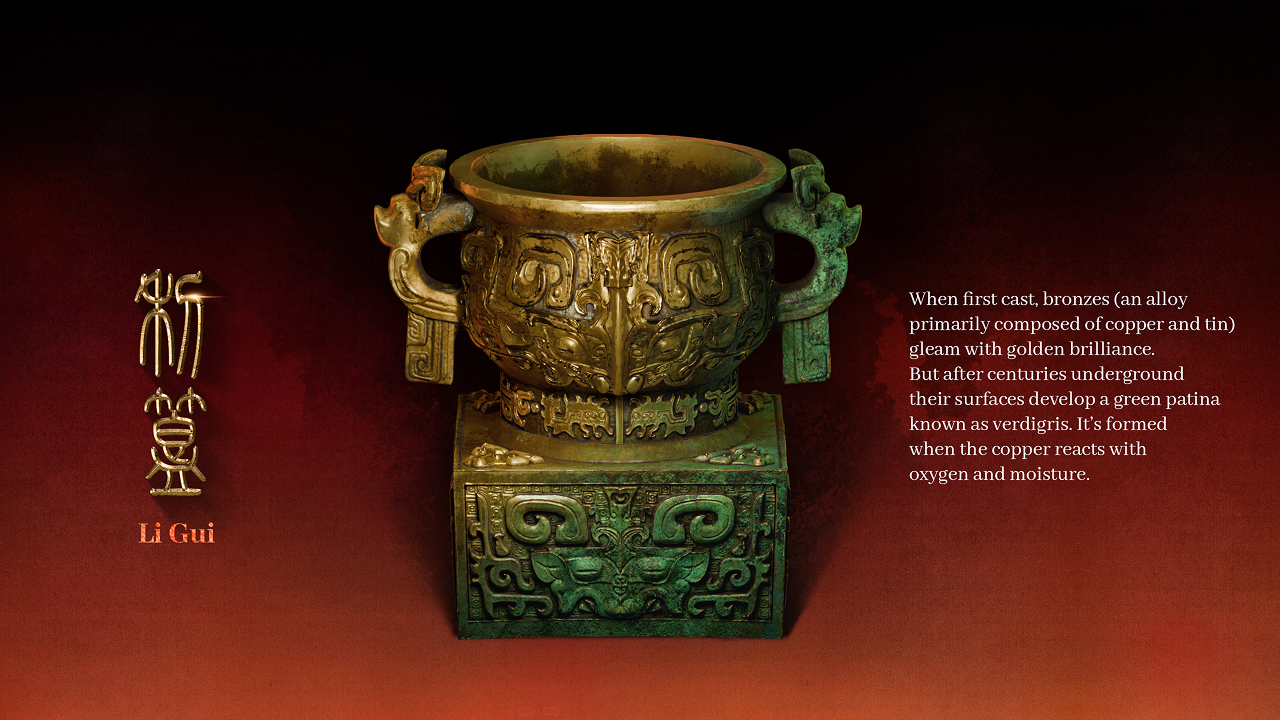
In this section, oracle-bone figures “awaken” from the cattle scapula, crossing fields and offering sacrifices to the heavens before leaping into the Li Gui and transforming into its inscription. The inscription reflects the astronomical event of the Year-Star conjunction, anchoring the historical moment of King Wu’s campaign against Shang and the rise of the Zhou dynasty.
Using oracle divination as the visual starting point, this section shows how “asking the heavens” shaped early ritual order and how bronze vessels became the medium connecting divine will with historical record. Centered on the Li Gui, it reconstructs the date of King Wu’s conquest from its 32-character inscription, highlighting bronzes as both ritual tools and authoritative recorders of state events and historical time.

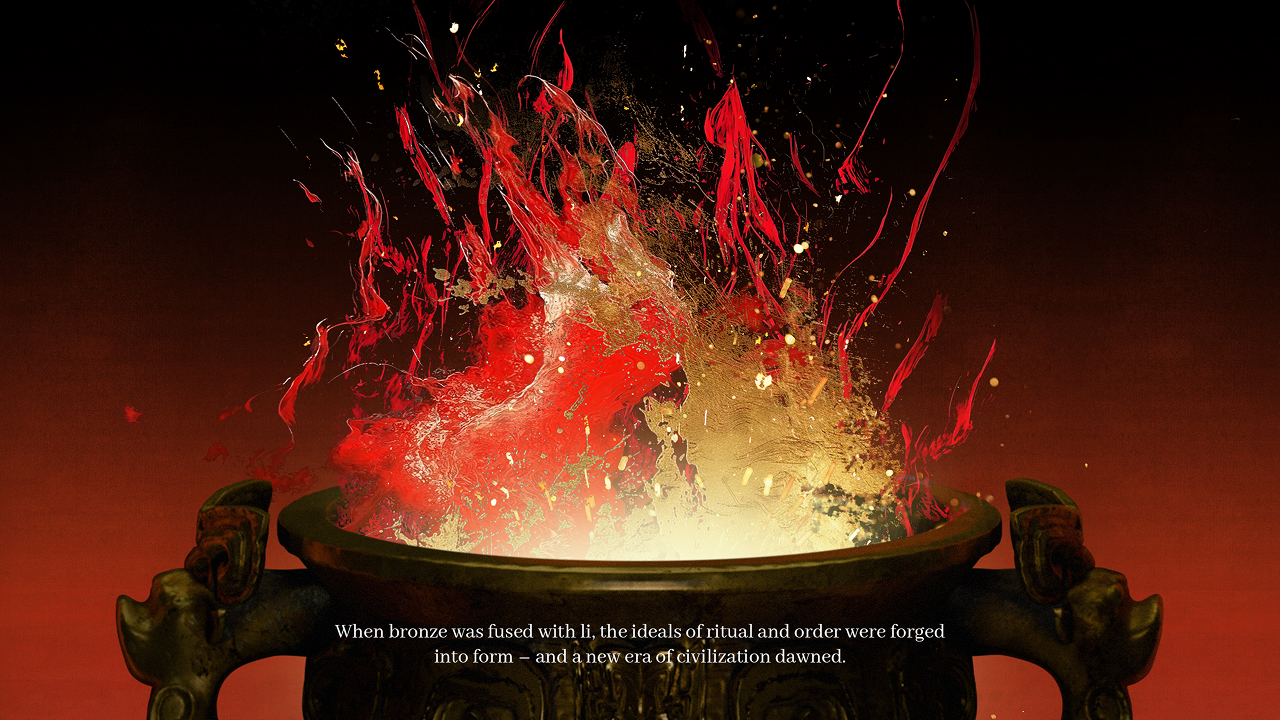
This section visualizes the hierarchical ding–gui system described in The Rites of Zhou, presenting vessel combinations for each social rank—from the Son of Heaven to lower aristocrats. Higher ranks were entitled to more ding and gui and more elaborate sacrificial food arrangements.
Through quantity, arrangement, and a clear hierarchical structure, users intuitively perceive the ancient social order in which “vessels defined rank.” Bronze food vessels functioned not merely as utensils but as material symbols of political authority, lineage status, and social identity, embodying the core structure of early Chinese order.

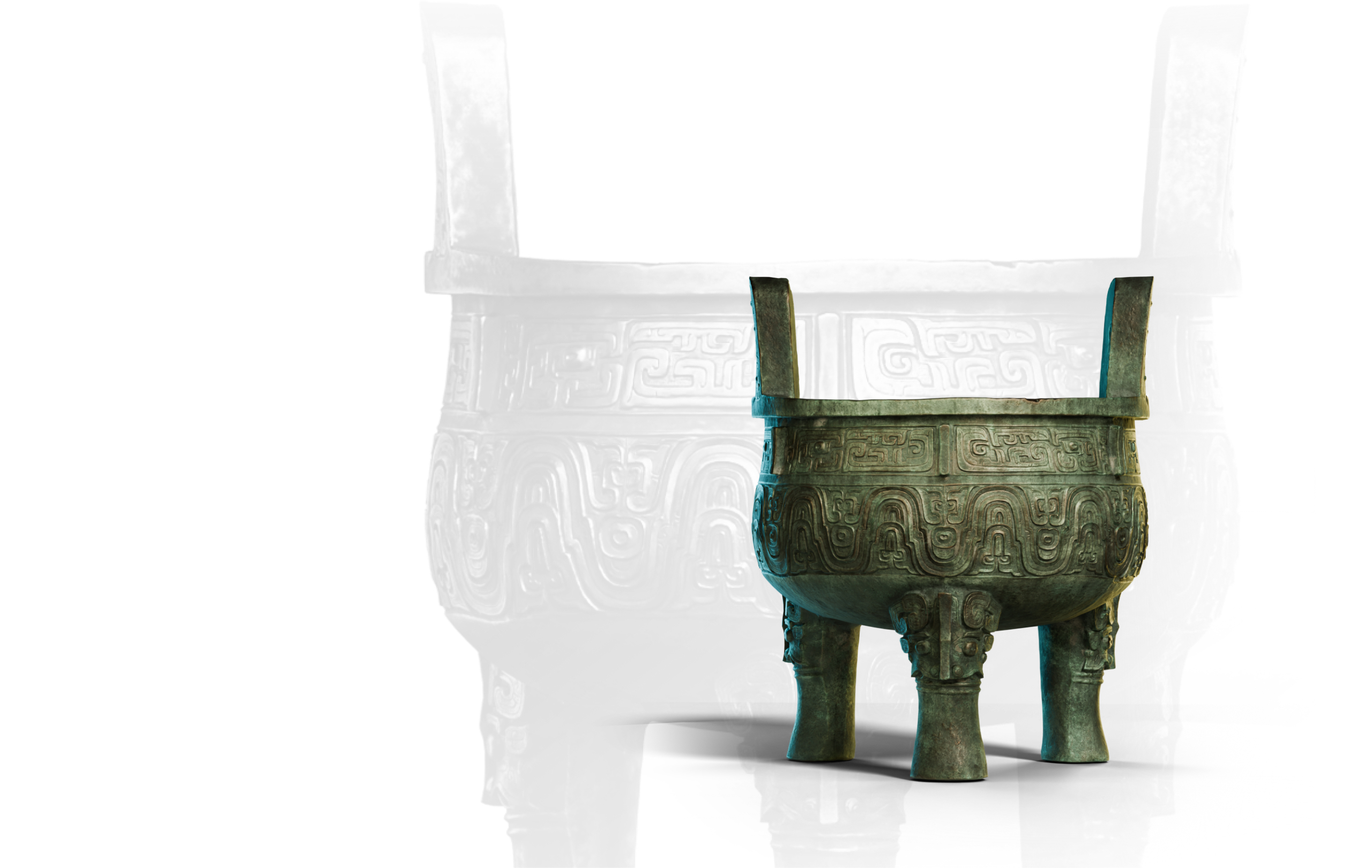
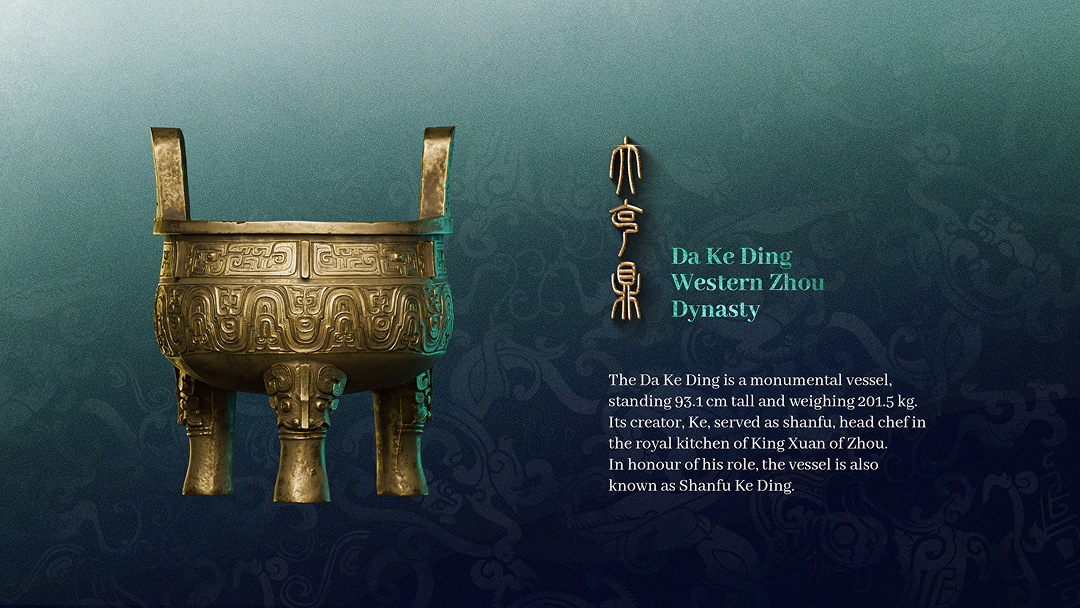
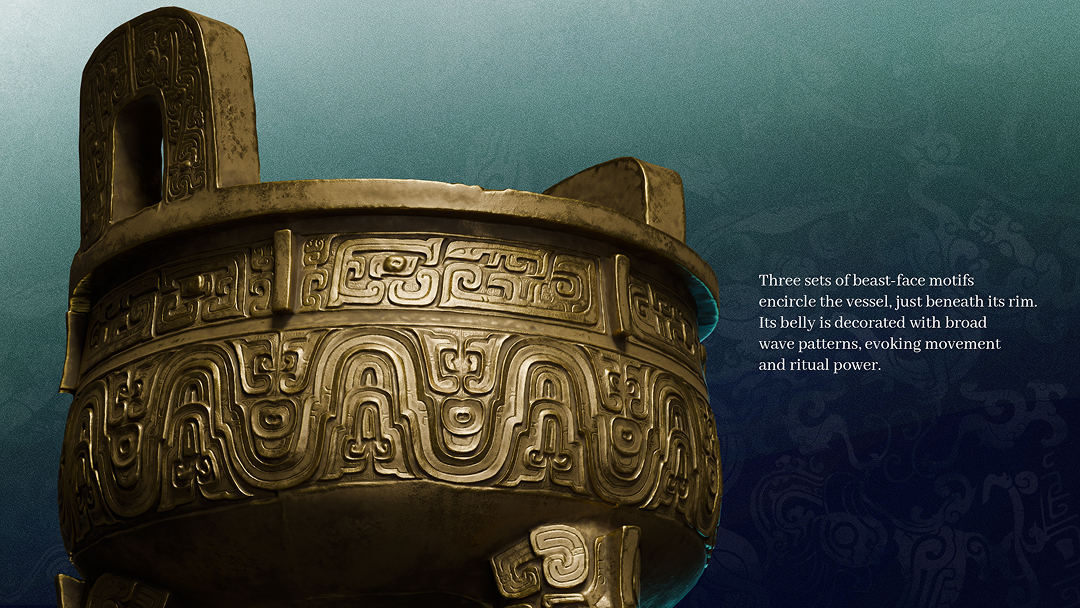
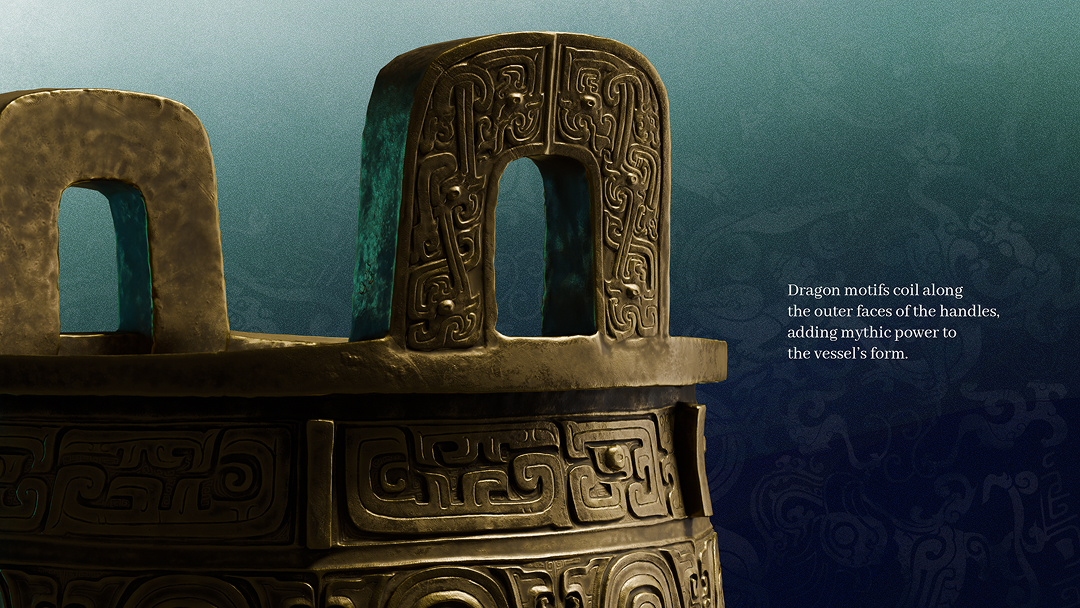
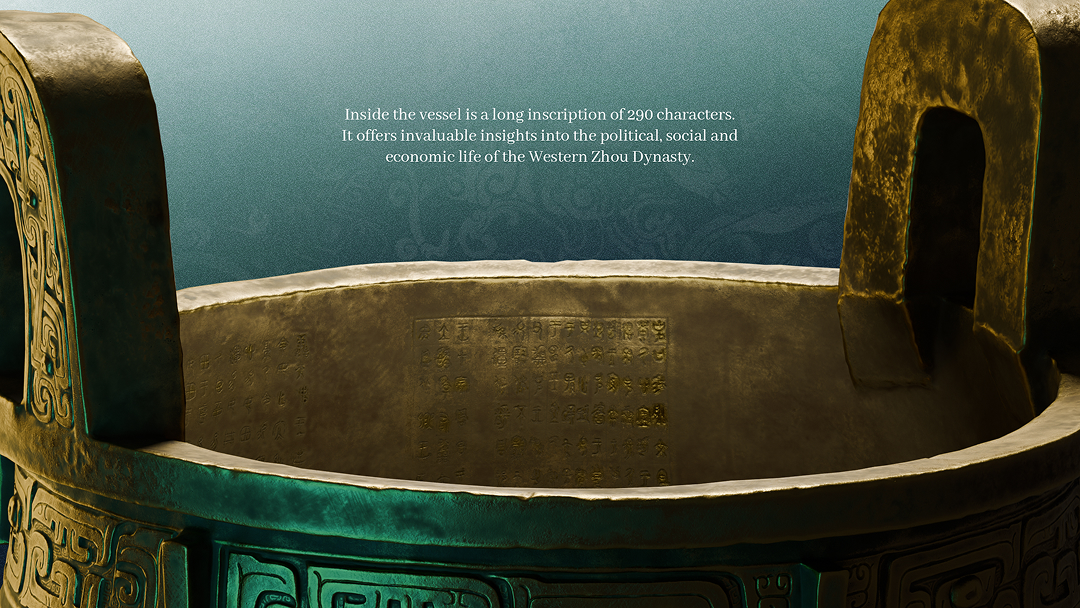
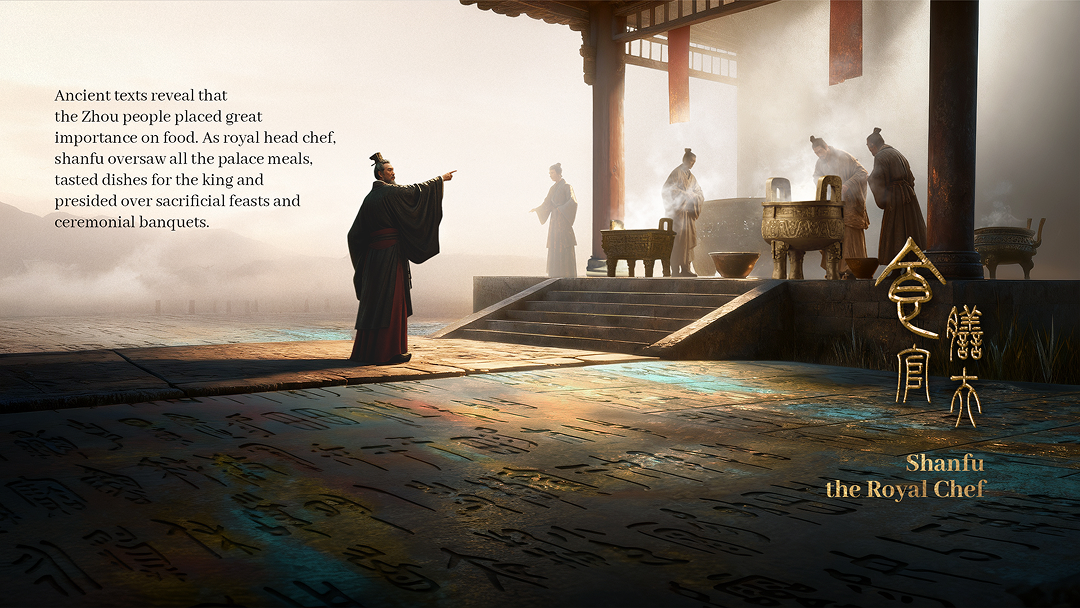
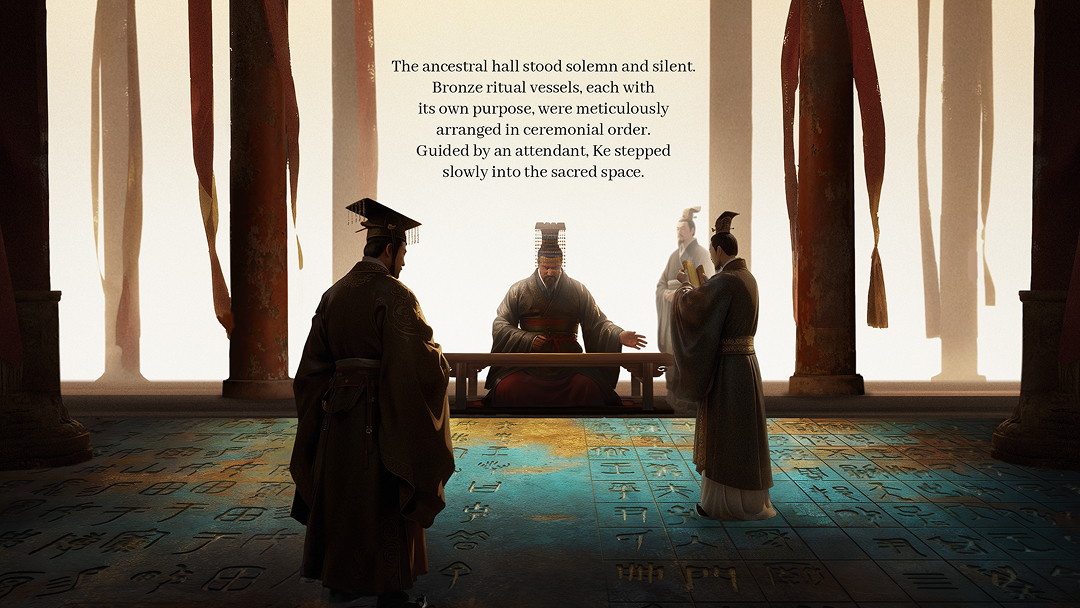
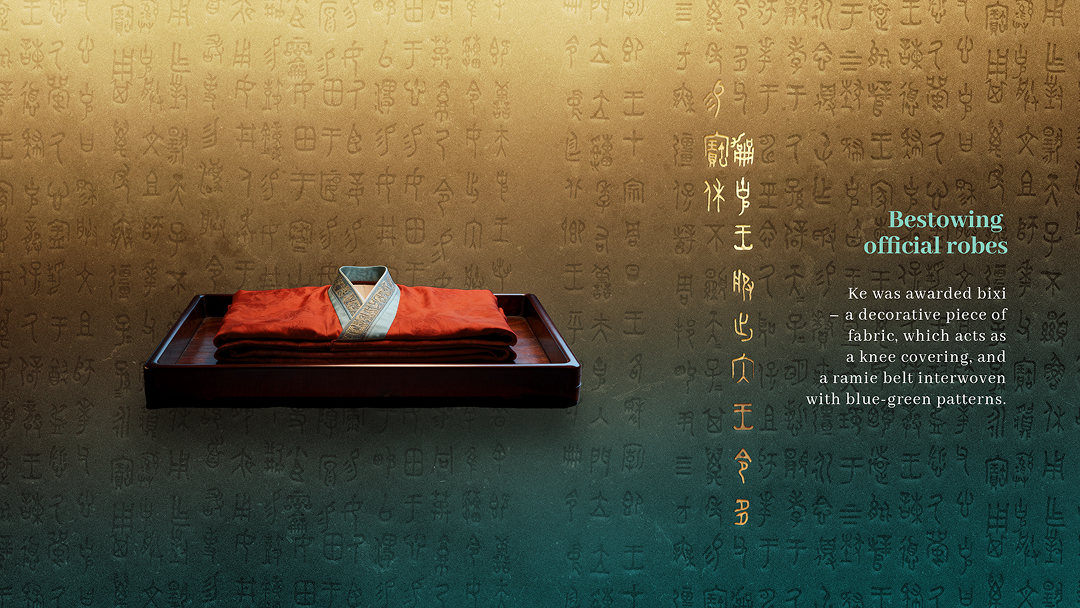
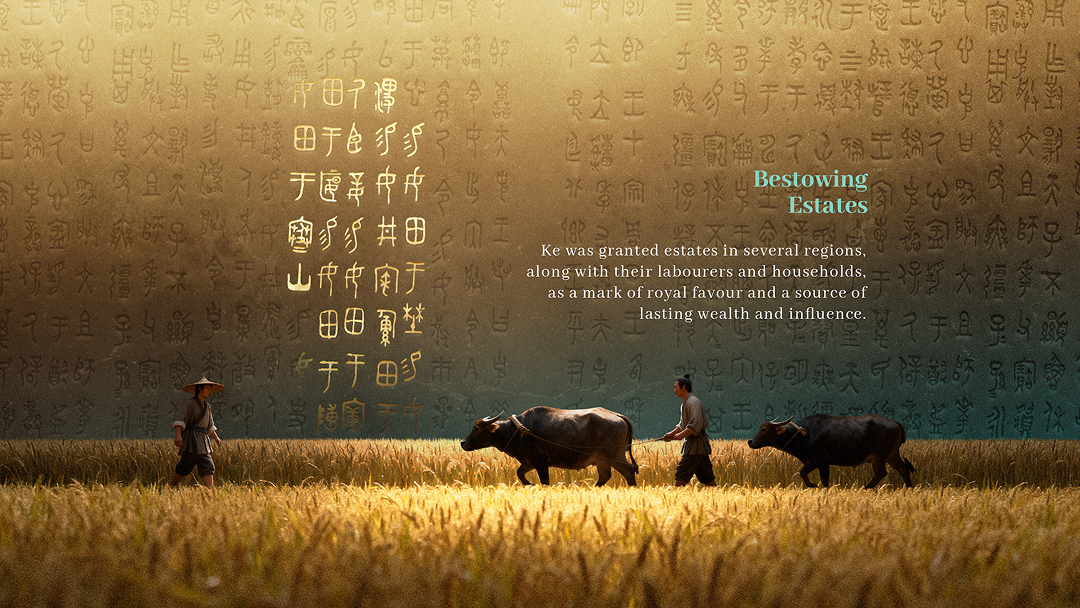
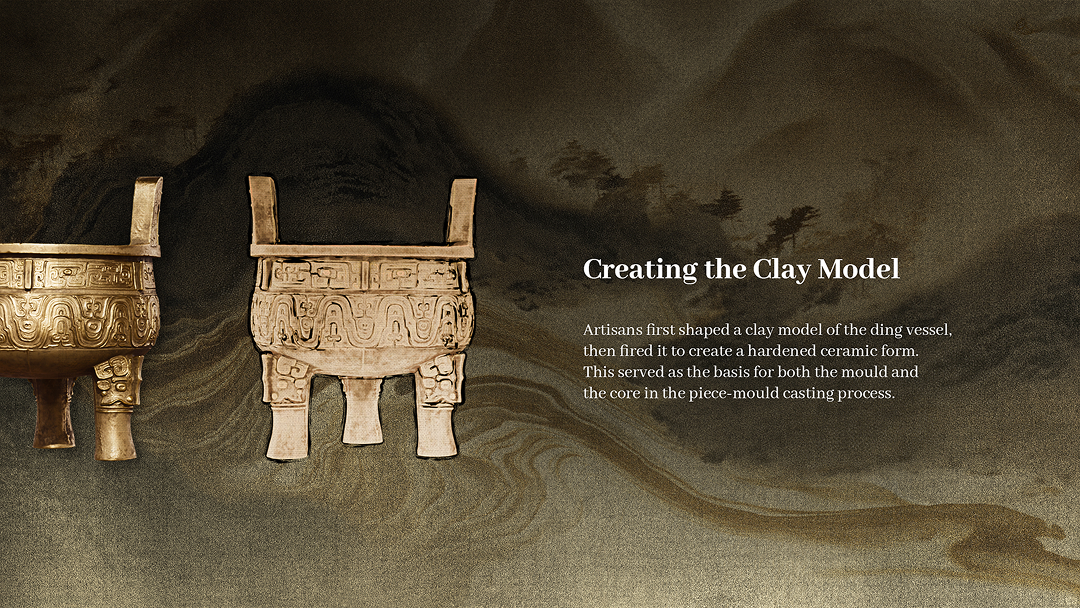
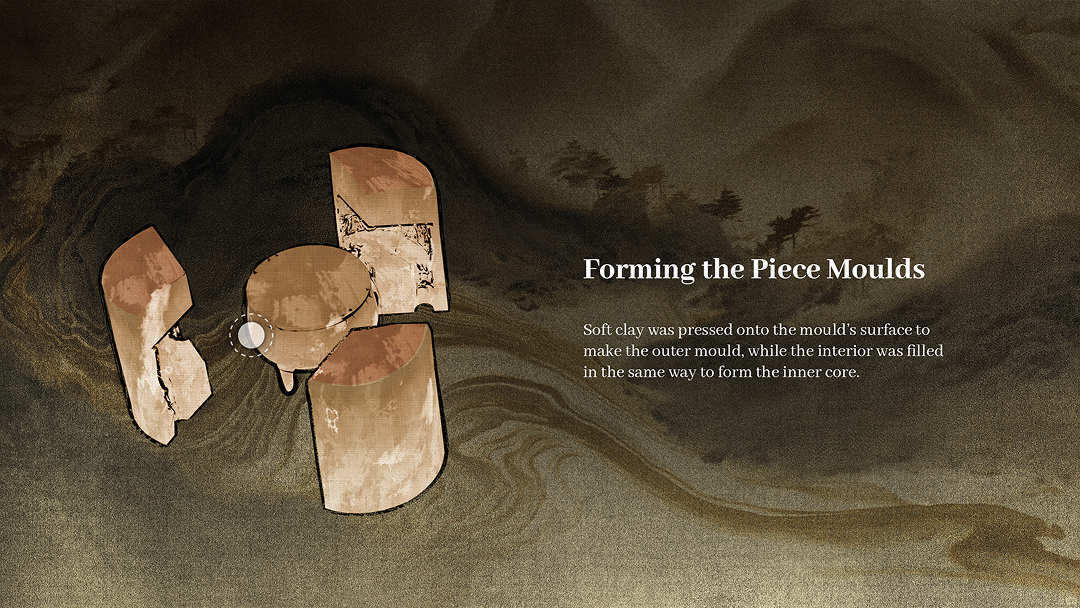
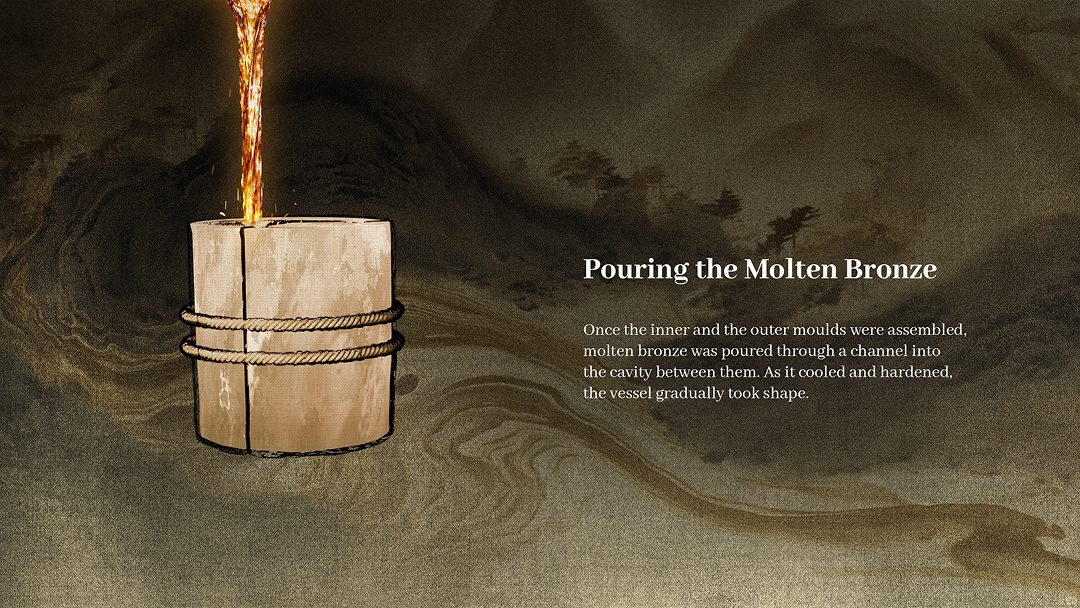
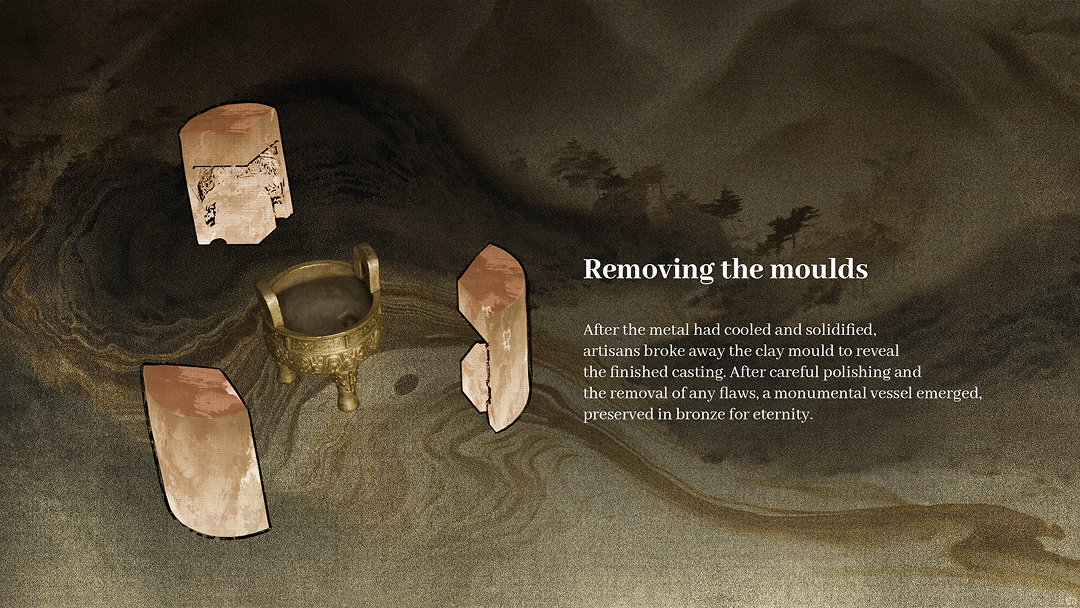
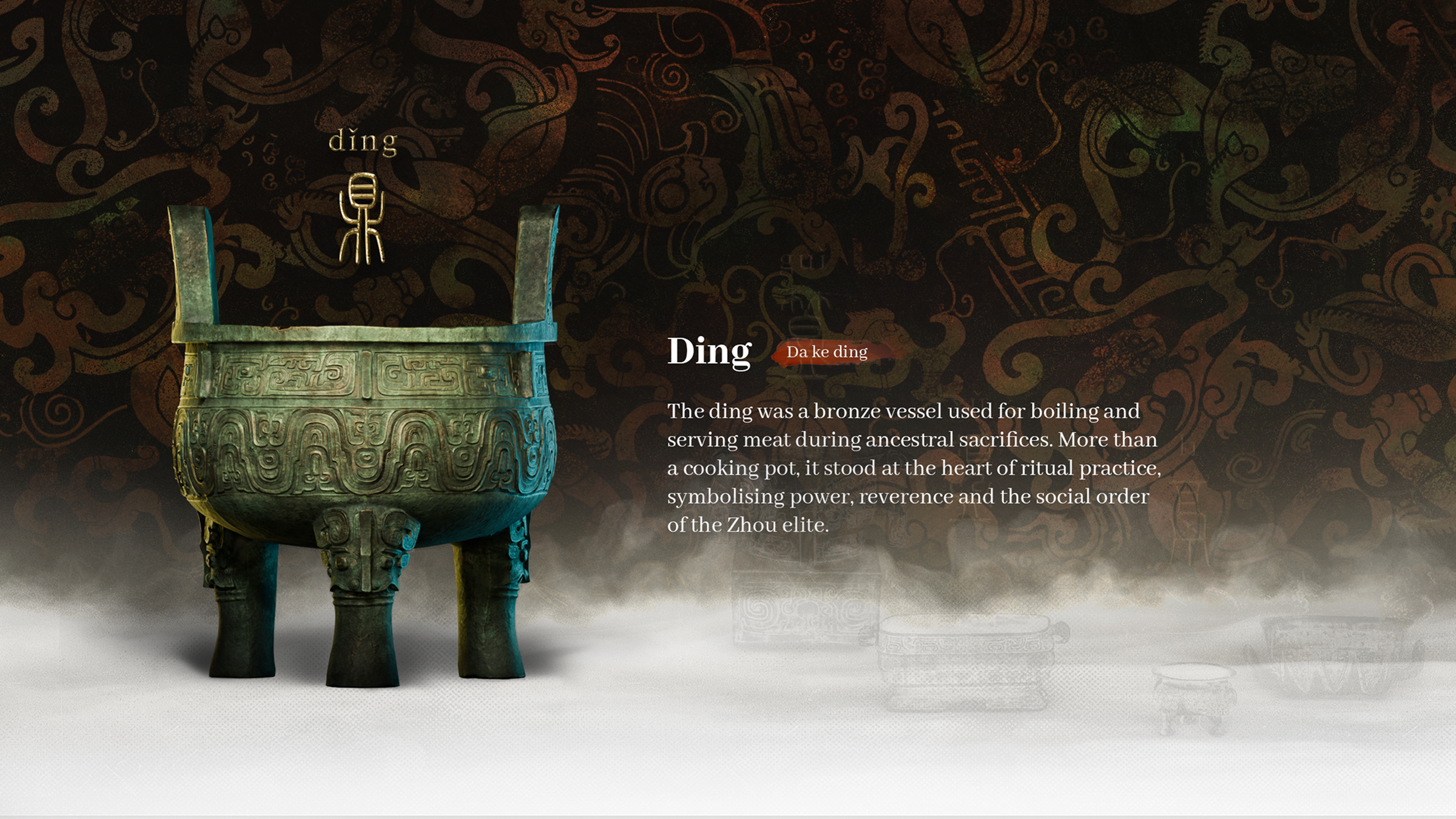
Using the renowned Western Zhou Da Ke Ding as an anchor, this section illustrates the convergence of state hierarchy and individual destiny. It moves from vessel patterns and the 290-character inscription, to the role of Shanfu, head of the palace food-officer system, and finally to the technical sophistication of piece-mould casting. Together, these elements reveal how bronze vessels operated at the intersection of state institutions, personal honor, and advanced craftsmanship, forming a tightly integrated ritual and technical system.
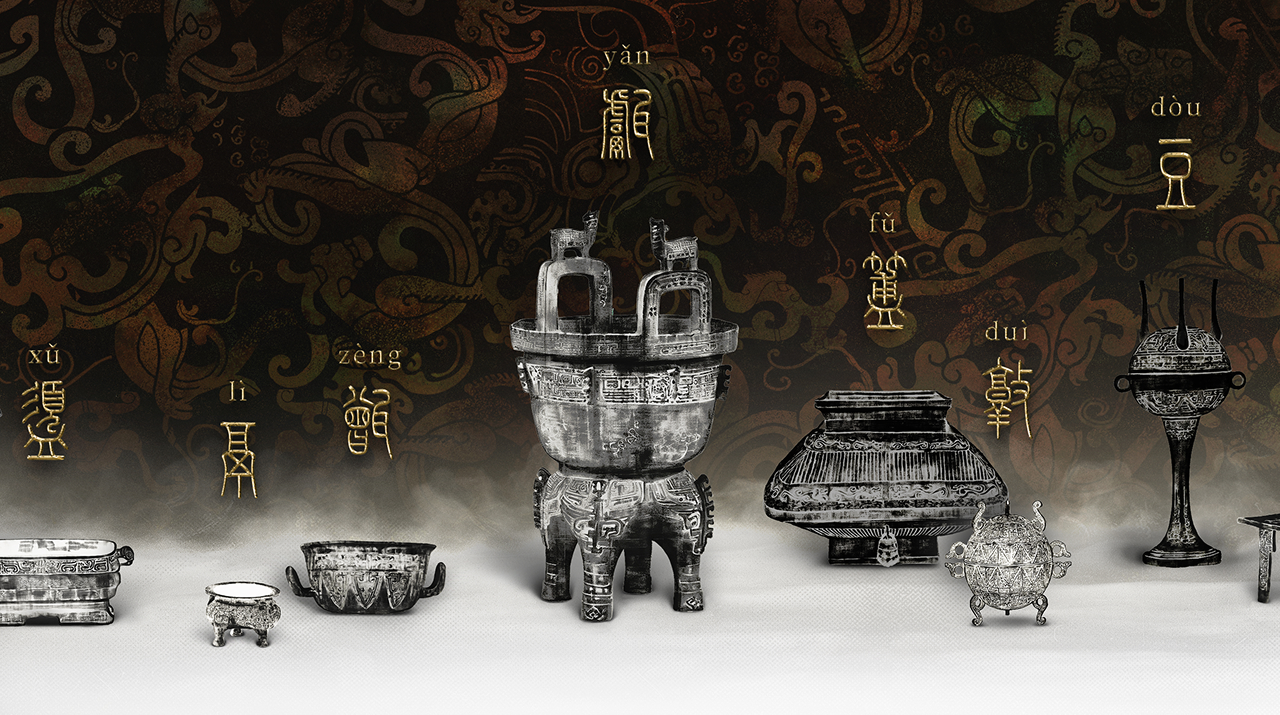
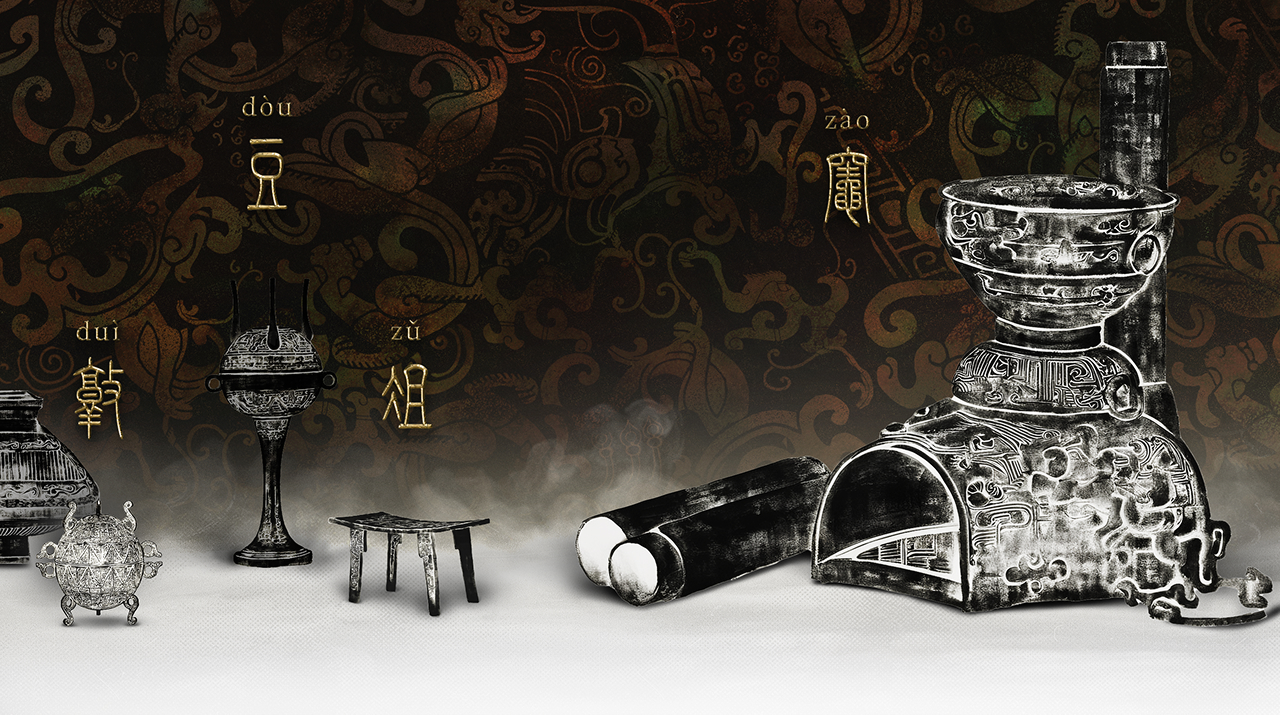
This section systematically presents the categories and functions of bronze food vessels, including ding, gui, xu, li, zeng, yan, fu, dui, dou and others. When hovering over the rubbings-style images of each type, detailed information about representative vessels is displayed.
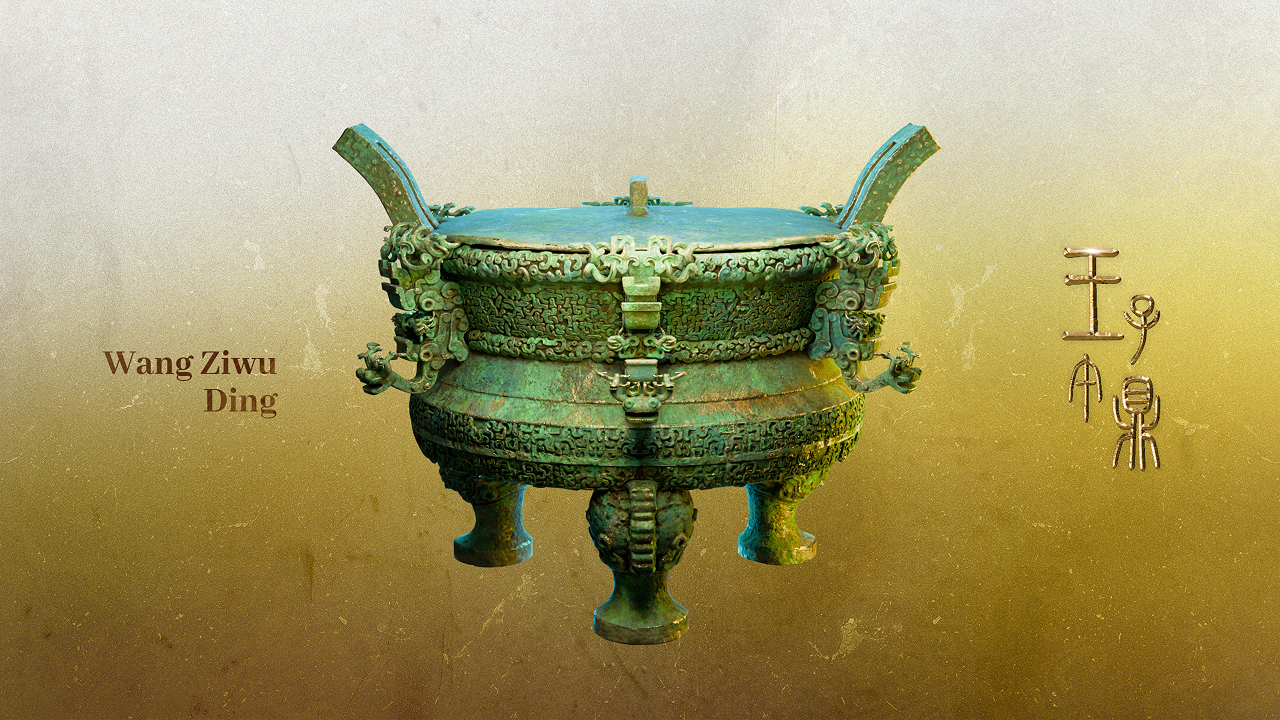
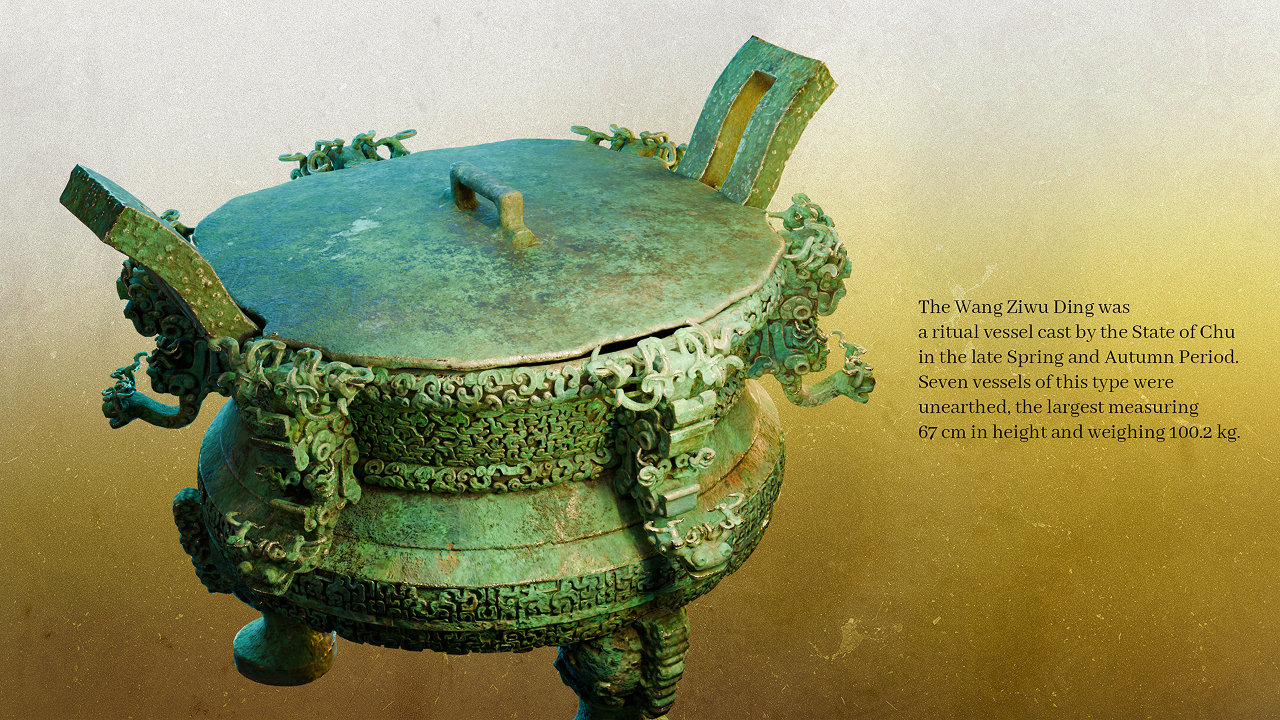
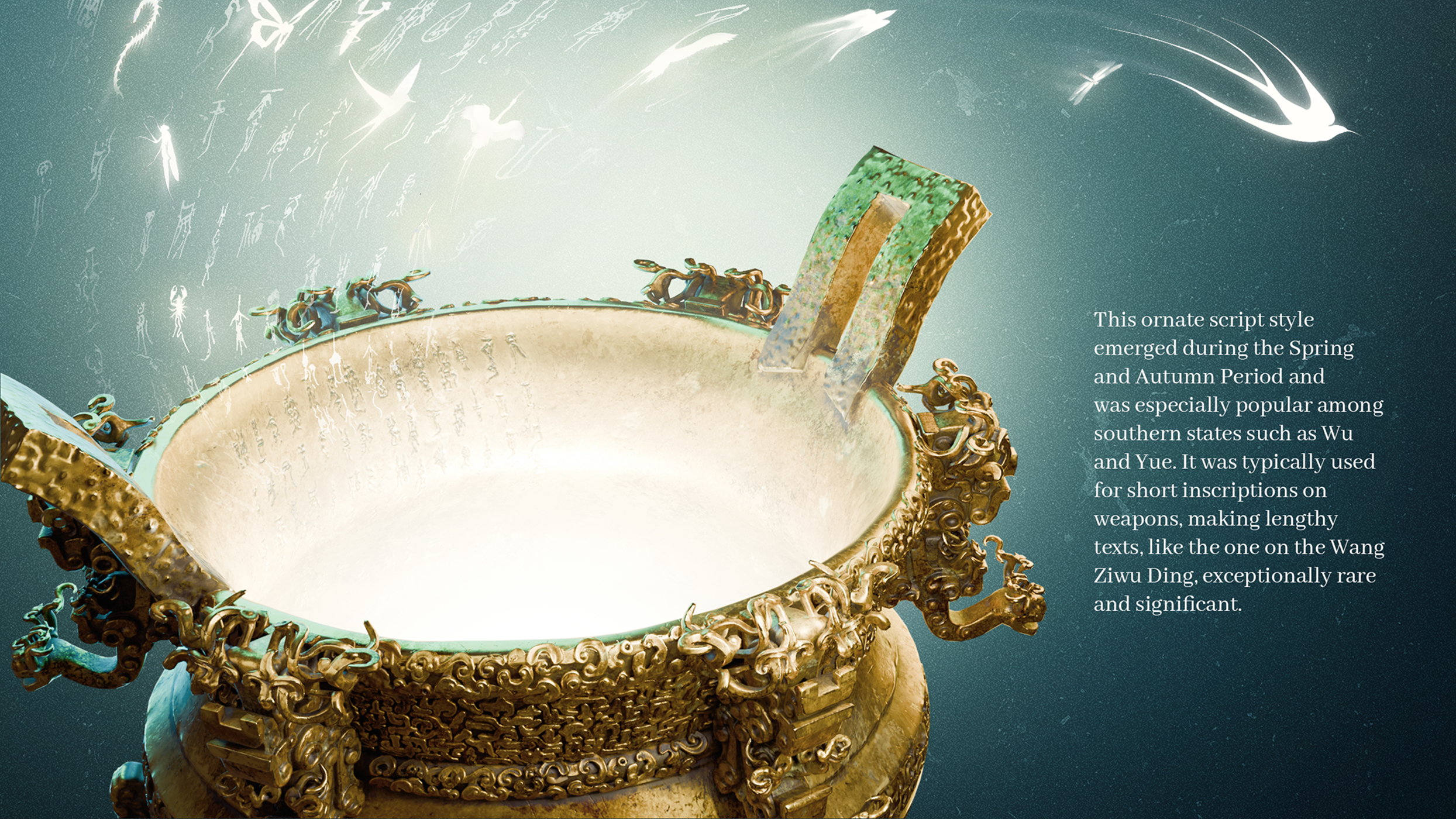
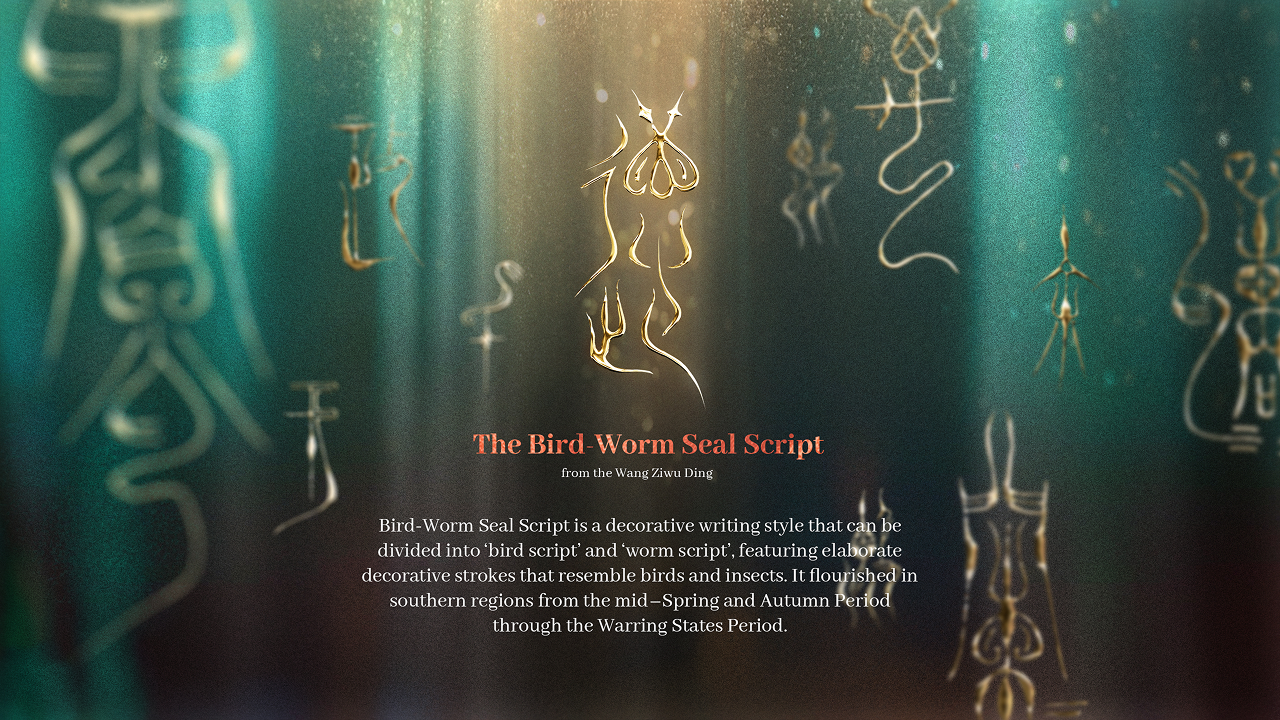
Using the Wang Ziwu Ding as a case study, this section traces pre-Qin script evolution—from simple early Western Zhou inscriptions, through mid-Zhou “heart-shaped” elements, to the ornate Zhongshan and bird-worm scripts of the Warring States. Changes in content reveal how script recorded power, history, and thought, evolving from pictographs into expressive, aesthetic forms.
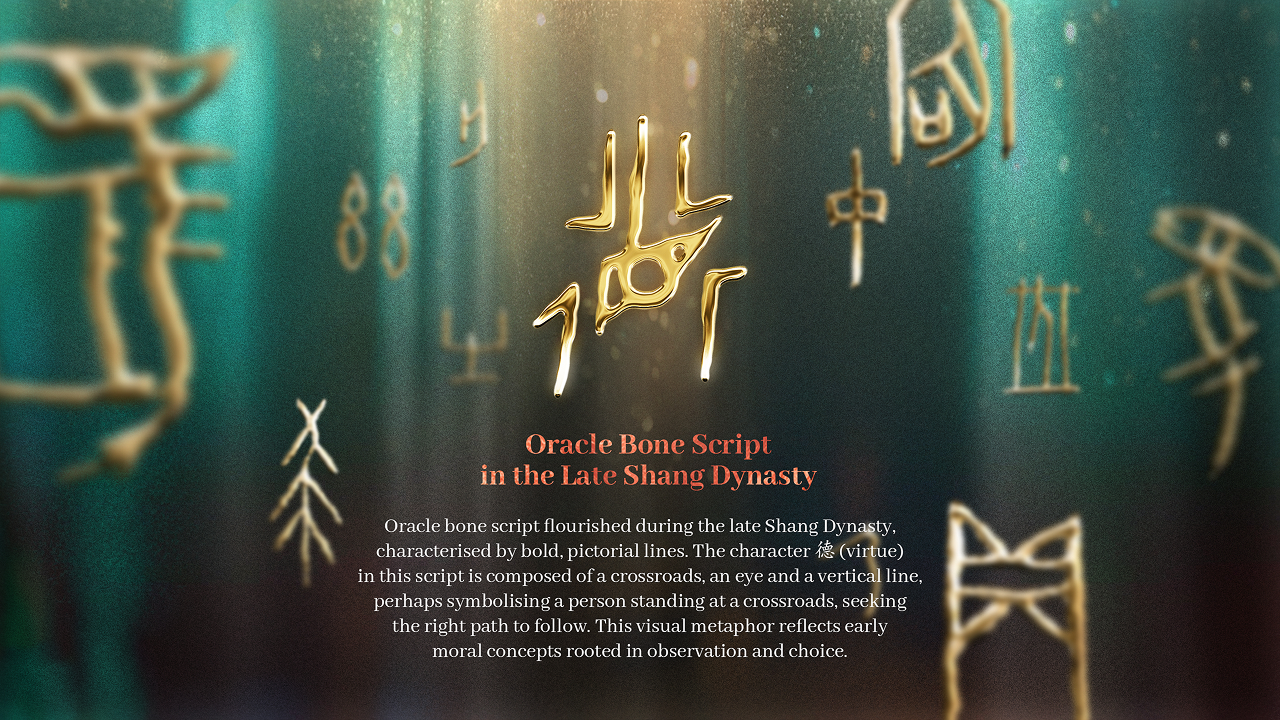
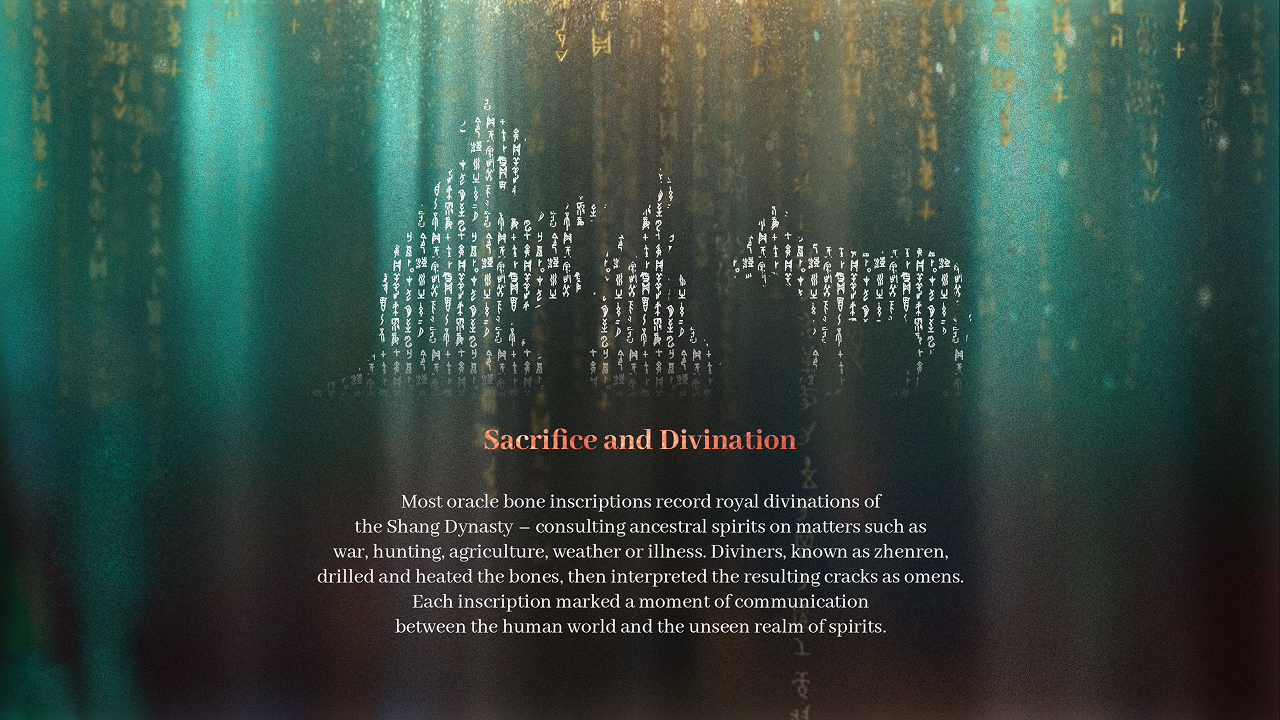
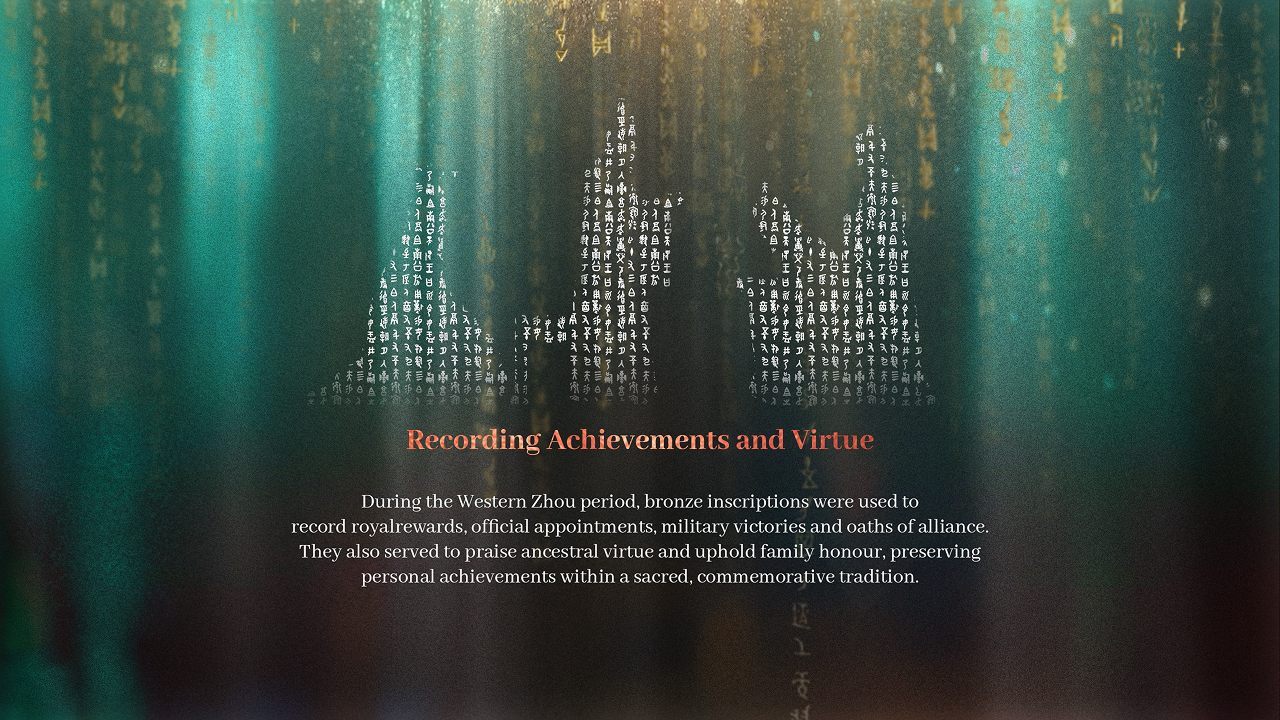
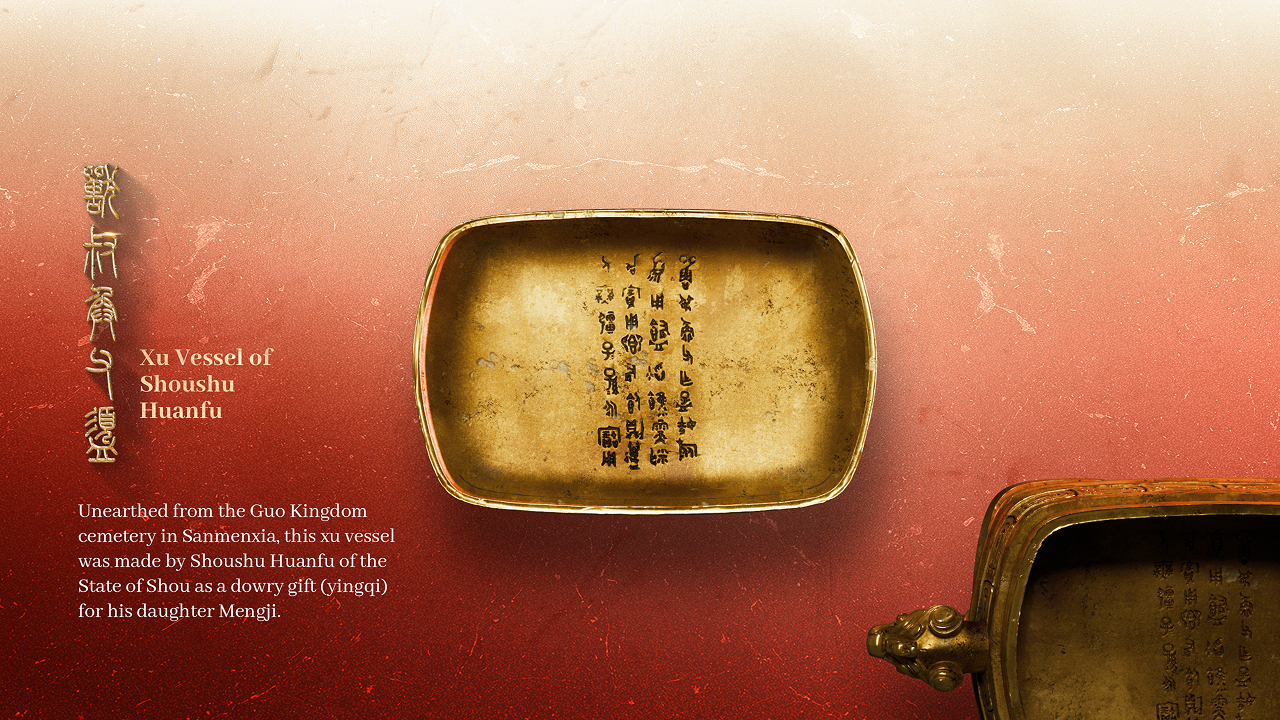
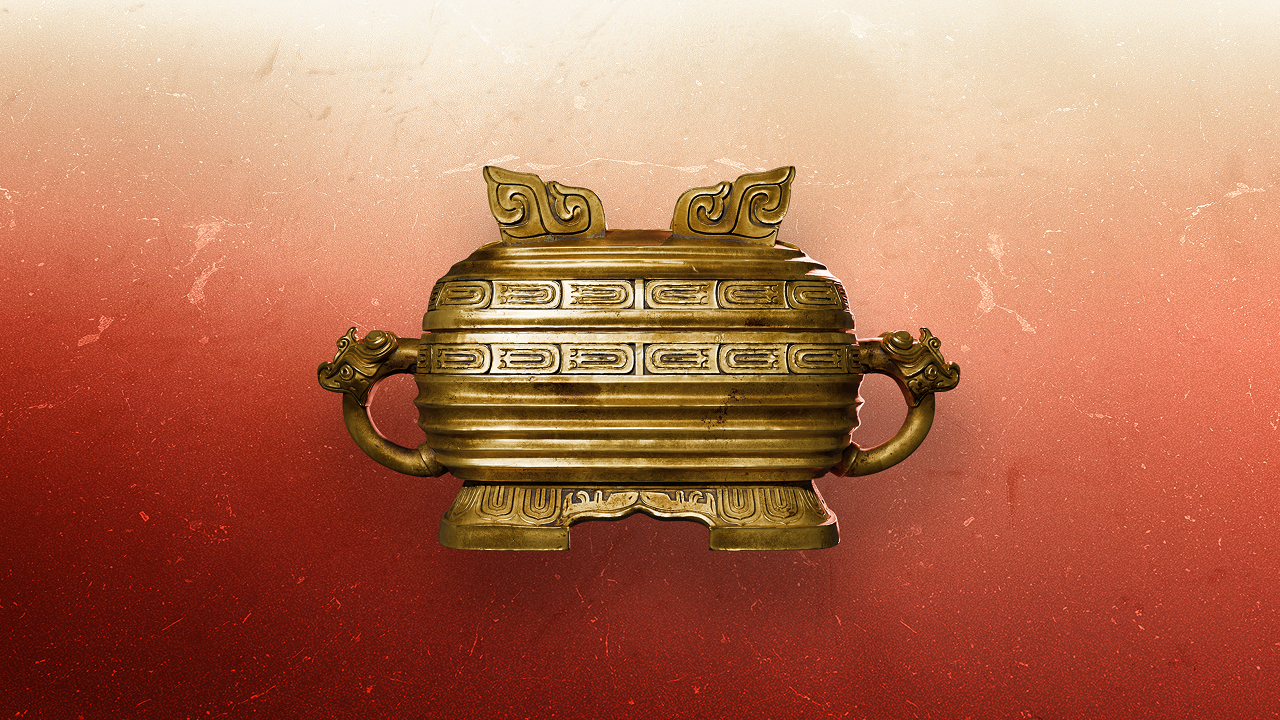
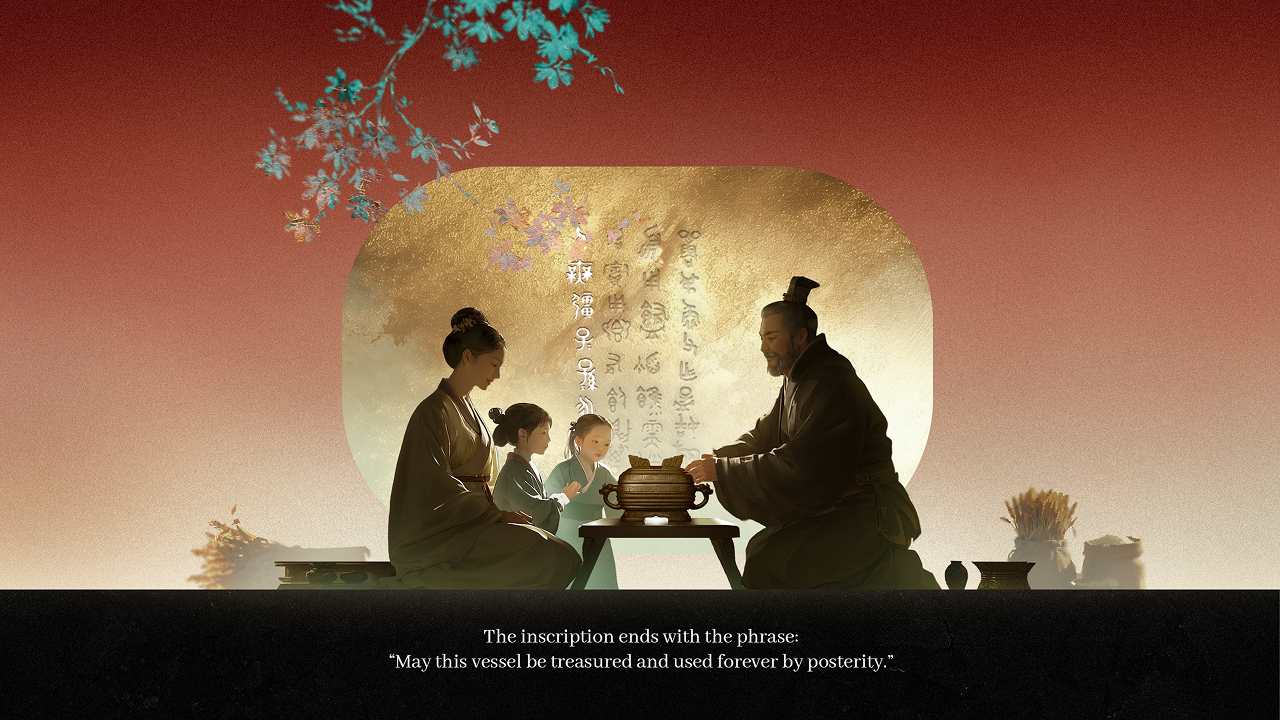
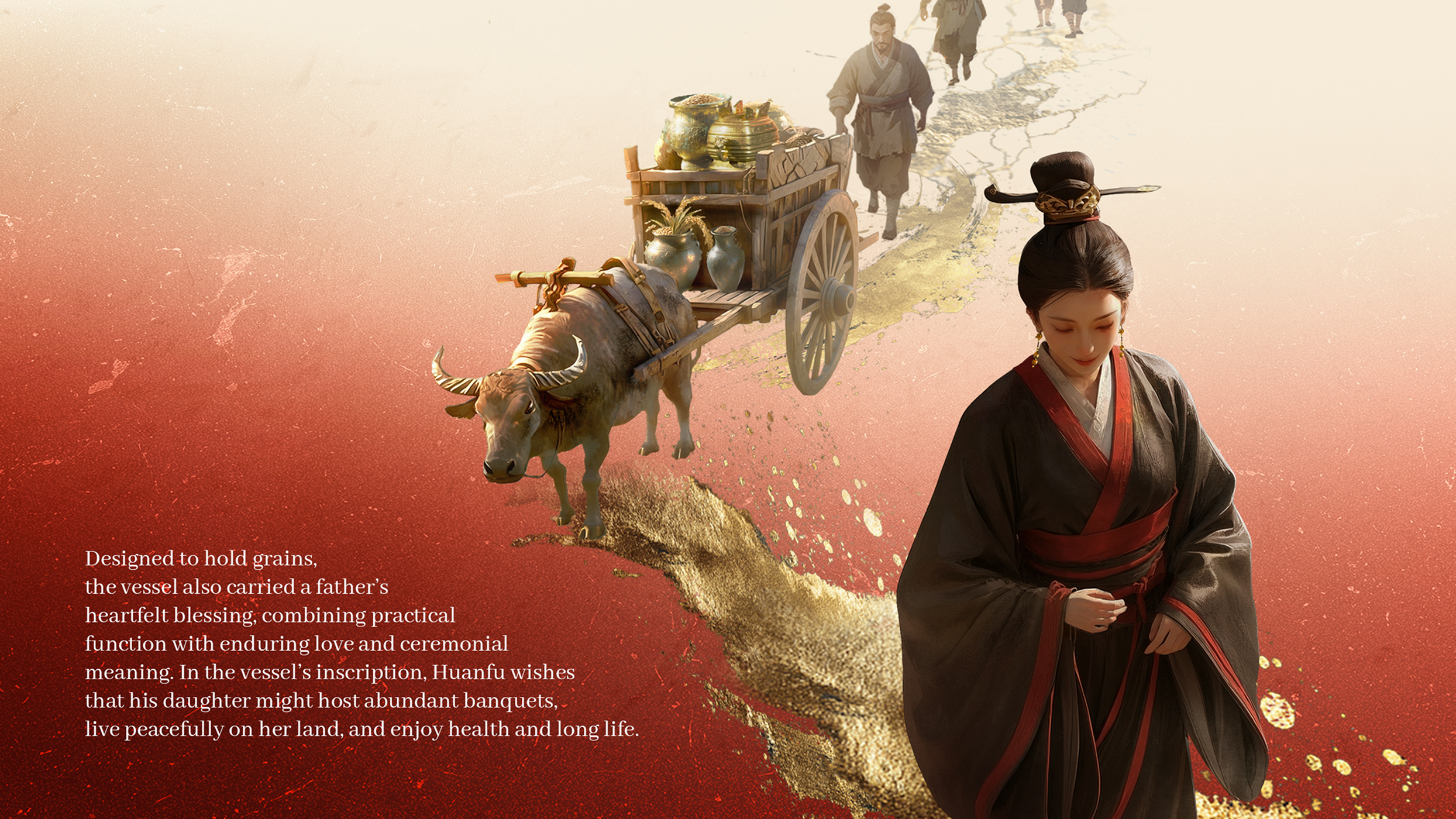
This section explores the emotional and familial dimension of bronze vessels, exemplified by pieces like Dong Ge Gui and the Xu of Shoushu Huanfu. Inscriptions preserve memories of warfare, lineage, and personal vows, showing that bronze vessels carried not only political authority but also family legacy.
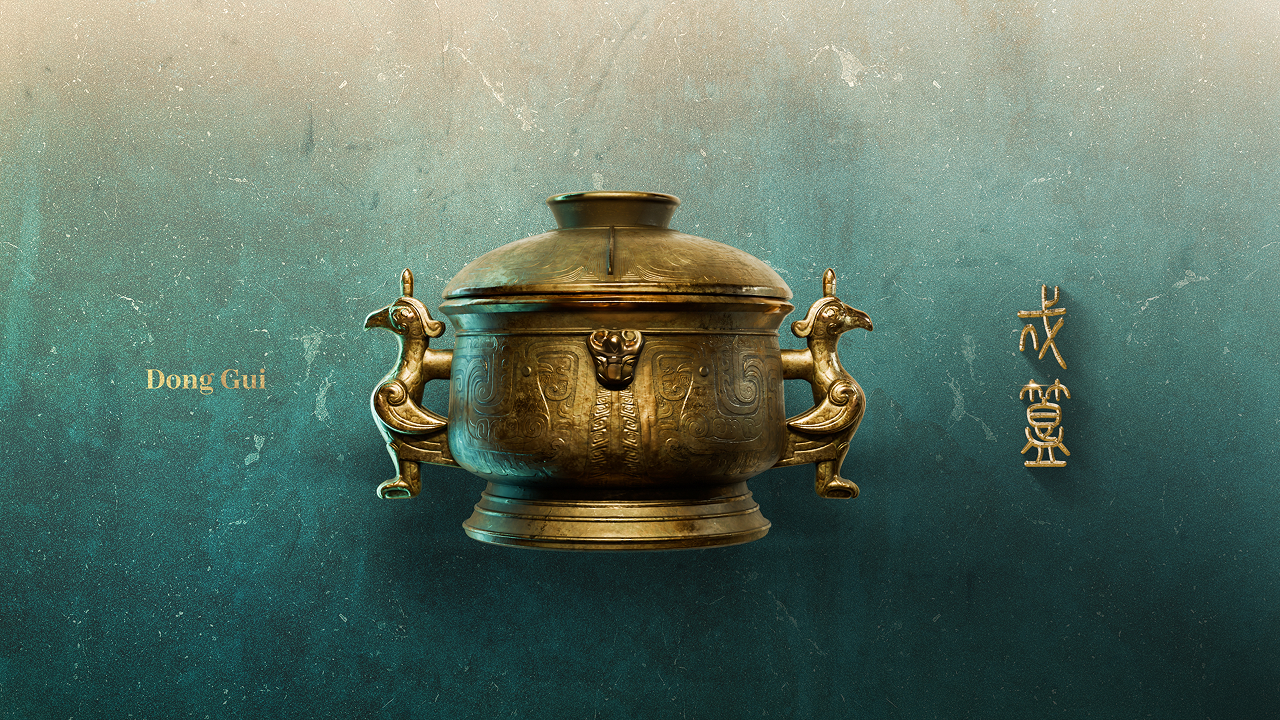
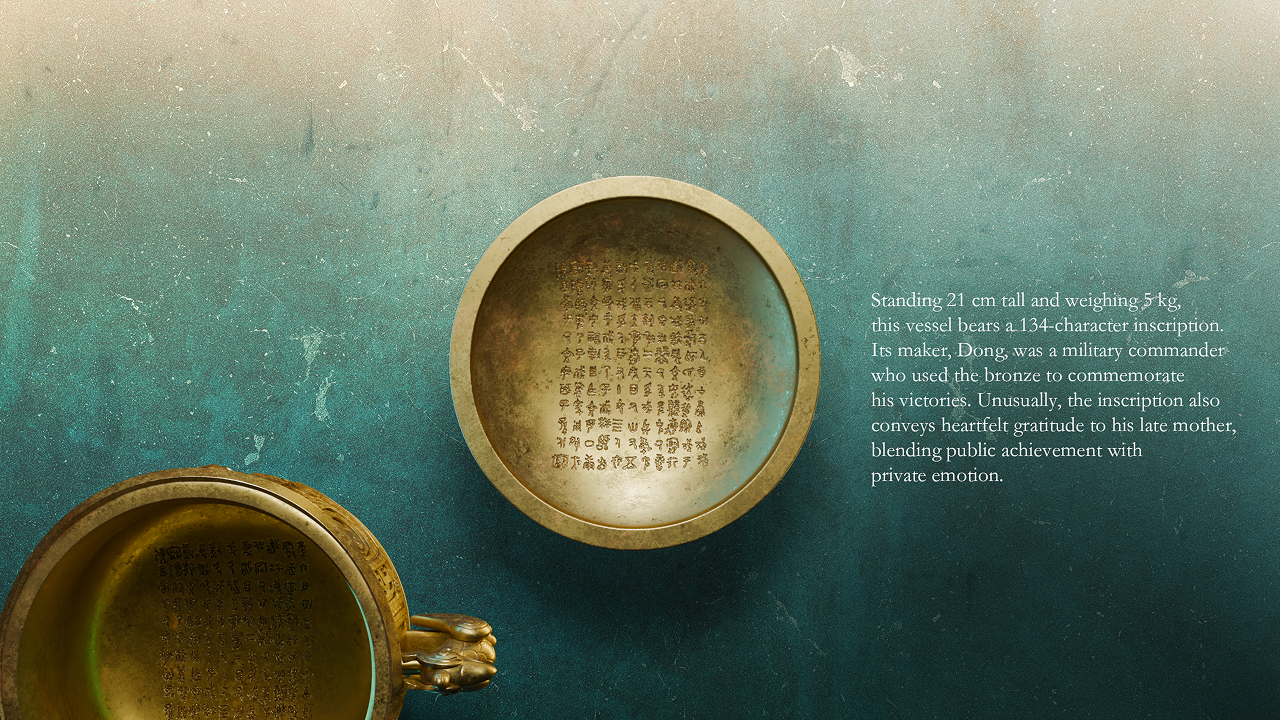
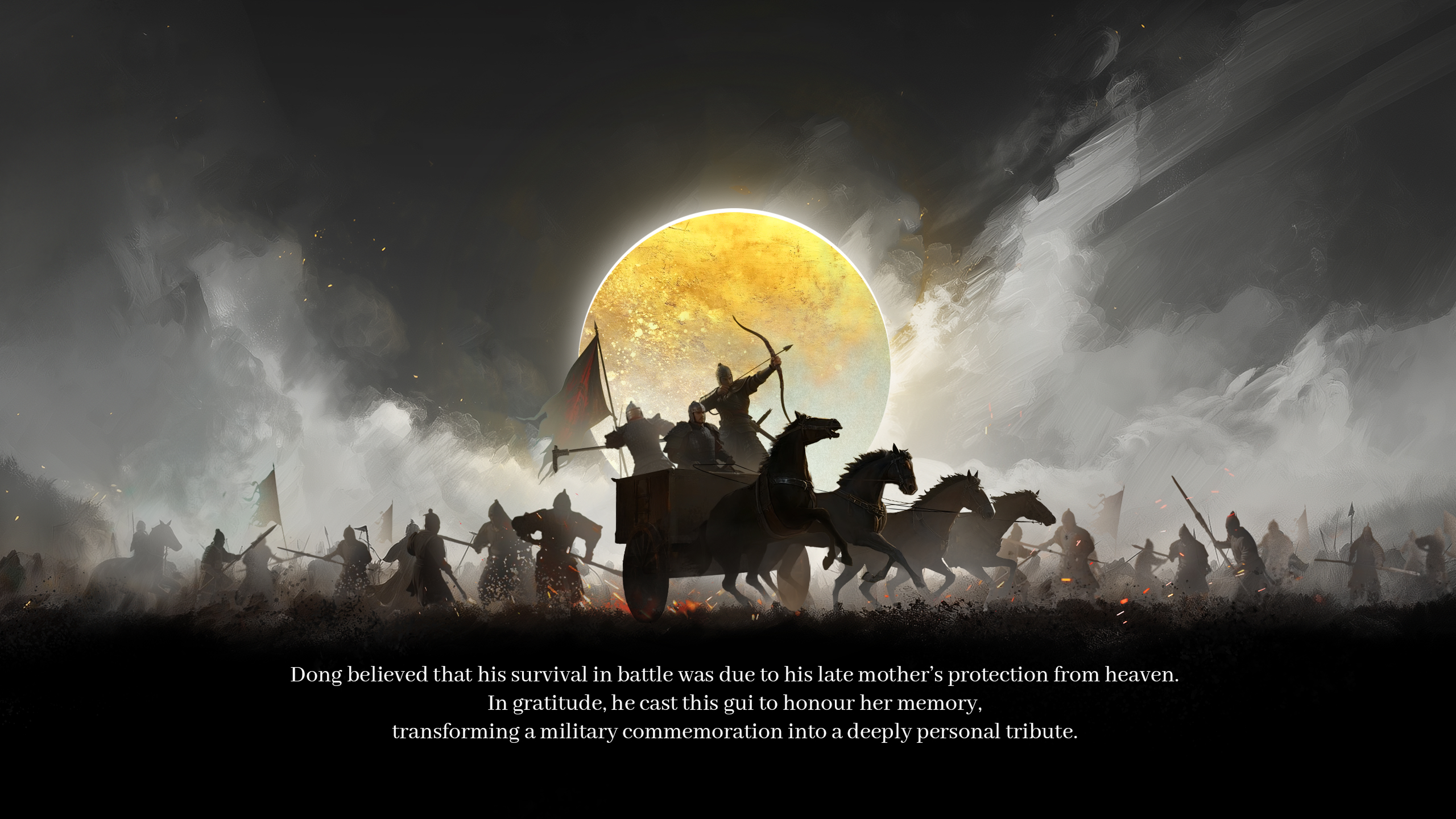
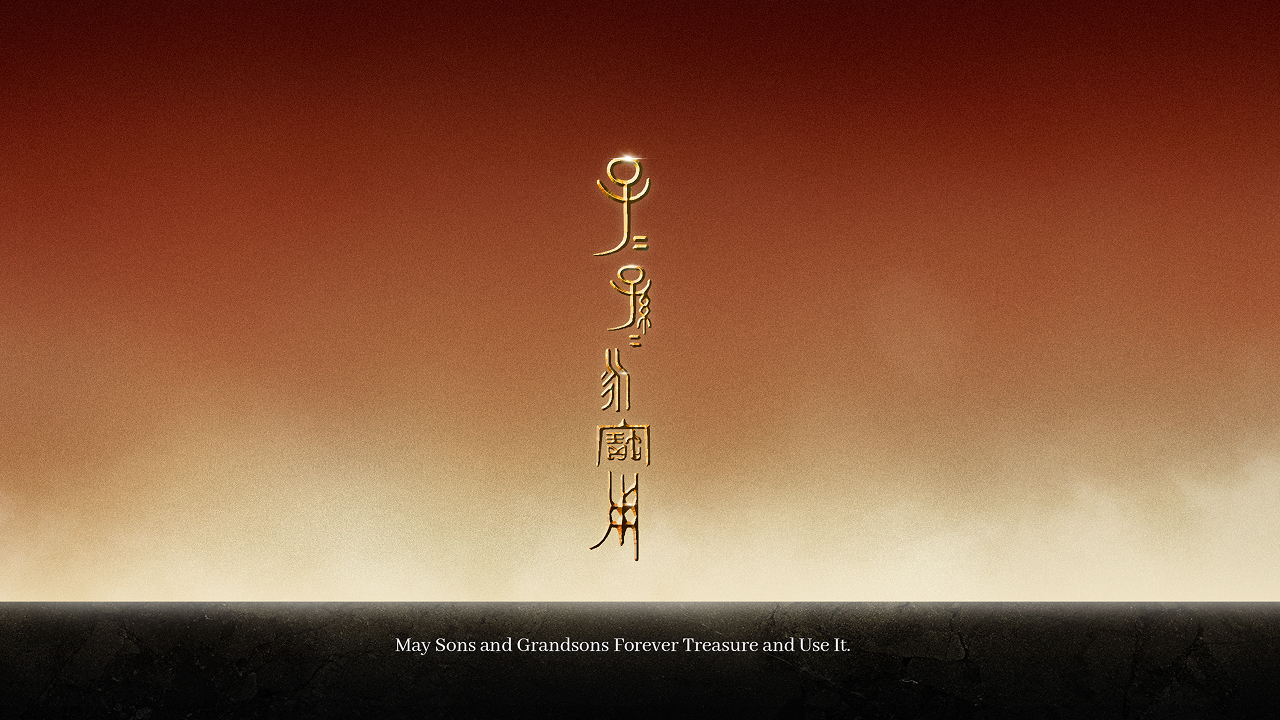
The phrase “May sons and grandsons forever treasure and use it” highlights how Bronze Civilization embodies both material culture and enduring human values.